Many people plug in their phone before bed and wake up to a full battery. This routine feels like the perfect way to start the day. It has become the norm since night time is when we finally set our devices aside.
We want to explore this common habit that sparks debate in the tech community. Some experts raise concerns about long-term battery health. Others insist modern phones handle it perfectly fine with protection chips that prevent overheating.
This guide answers a core question: is overnight charging harmful or just a tech myth? We’ll cut through confusion with clear, actionable advice based on technical facts rather than internet rumors.
You’ll learn the science behind battery health and practical strategies to maximize your phone’s lifespan. We’re here to help you make informed decisions about your charging routine.
Key Takeaways
- Overnight phone charging is a widespread habit many people follow.
- Modern smartphones have protection chips to prevent charging issues.
- There’s ongoing debate about long-term battery health impacts.
- This guide provides science-based facts about charging practices.
- You’ll learn practical strategies to optimize your battery lifespan.
- We help you make informed decisions about your charging routine.
The Science Behind Battery Health and Overnight Charging
At the heart of every smartphone lies a sophisticated chemical system that determines its longevity. We’ll explore how lithium-ion technology functions and what really happens during extended power sessions.
How Lithium-Ion Batteries Work
Your phone’s battery operates through ion movement between electrodes. During use, ions travel from anode to cathode, releasing energy. The reverse process occurs when you plug in your device.
Modern phones feature Power Management Integrated Circuits (PMICs) that control current flow. These smart chips prevent overcharging by cutting power when the battery reaches 100% capacity.
The Impact of Heat and Prolonged Charging
When your device stays connected after being fully charged, trickle charging begins. The battery cycles between 99% and 100% as it powers background processes.
Battery experts recommend maintaining charge levels between 20-80% for optimal health. Extreme highs and lows create additional stress on the chemical components.
Heat accelerates degradation when combined with prolonged high-capacity states. Even moderate warmth during extended charging can gradually reduce overall battery capacity.
| Charging Scenario | Stress Level | Capacity Impact |
|---|---|---|
| 20-80% Range | Low | Minimal degradation |
| Frequent 0-100% Cycles | Medium | Moderate capacity loss |
| Extended 100% with Heat | High | Significant reduction |
Manufacturers design modern batteries to retain approximately 95% capacity after two years. This accounts for typical usage patterns including occasional overnight sessions.
Stop Charging Overnight: Understanding the Pros and Cons
Choosing how to power up your device involves balancing convenience with long-term battery health considerations. We’ll explore both sides of this debate to help you make informed decisions about your charging routine.
Each method has distinct advantages and trade-offs that affect your phone’s performance and longevity. Understanding these differences can optimize your charging strategy.
Wired vs. Wireless Charging Technologies
Wireless chargers use electromagnetic coils to transfer power without physical connectors. This technology creates a magnetic field that induces current in your phone’s receiver coil.
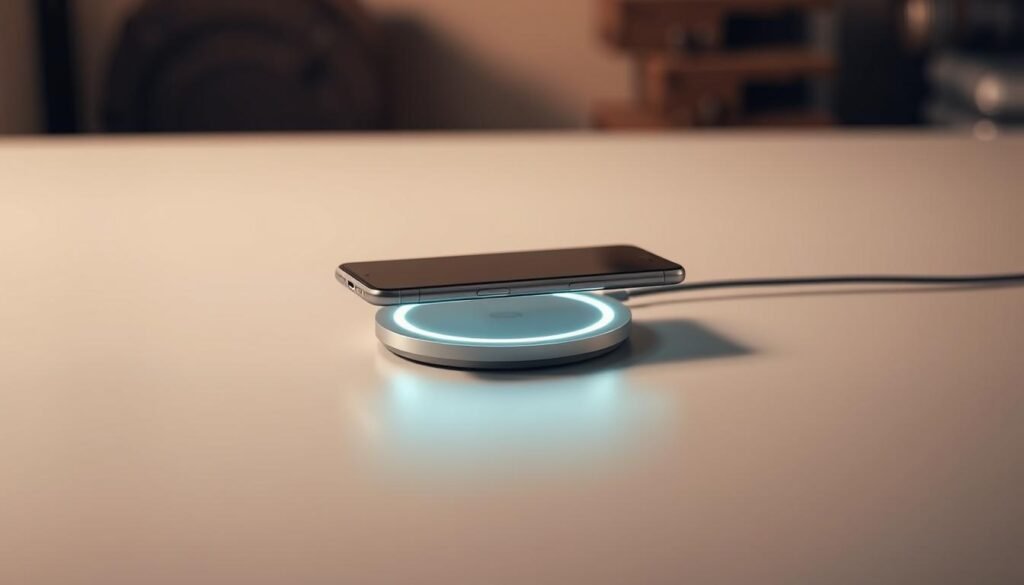
The slower pace of wireless power delivery can actually benefit battery health. Since it takes longer to reach full capacity, there are fewer trickle charge cycles throughout the night.
As one tech expert notes,
Wireless charging’s gradual approach keeps batteries in the optimal 50-80% range for extended periods.
However, precise alignment is crucial with wireless pads. Misplacement can leave you with a depleted battery in the morning.
| Feature | Wired Charging | Wireless Charging |
|---|---|---|
| Connection Type | Physical cable | Electromagnetic field |
| Charging Speed | Fast | Slower |
| Battery Stress | Higher at full capacity | Lower due to gradual charging |
| Convenience | Requires plugging | Drop-and-go placement |
| Safety | Exposed connectors | No physical contacts |
Wireless options eliminate wear on charging ports and reduce shock risks. They offer a clean, cable-free experience for your devices.
Some advocate for completely avoiding overnight sessions, suggesting daytime charging instead. This approach requires significant habit changes that may not suit everyone’s lifestyle.
Strategies to Minimize Battery Degradation
Your smartphone’s battery is designed for longevity, but simple habits can significantly extend its peak performance. We will show you how to use your device’s built-in intelligence and make small changes for a big impact.
The best approach combines smart technology with common-sense practices. This helps your phone battery stay healthy for years.
Optimizing Charging Habits with Adaptive Charging
Virtually every modern phone has a smart adaptive charging feature. This clever tool learns your routine to protect your battery.
It slows down power delivery, keeping the capacity around 80% until just before you wake up. You get a full charge without hours at maximum capacity.
Look for this setting in your battery menu. It might be called Optimized Battery Charging on iPhone, Adaptive Charging on Pixel, or Battery Protect on Samsung.
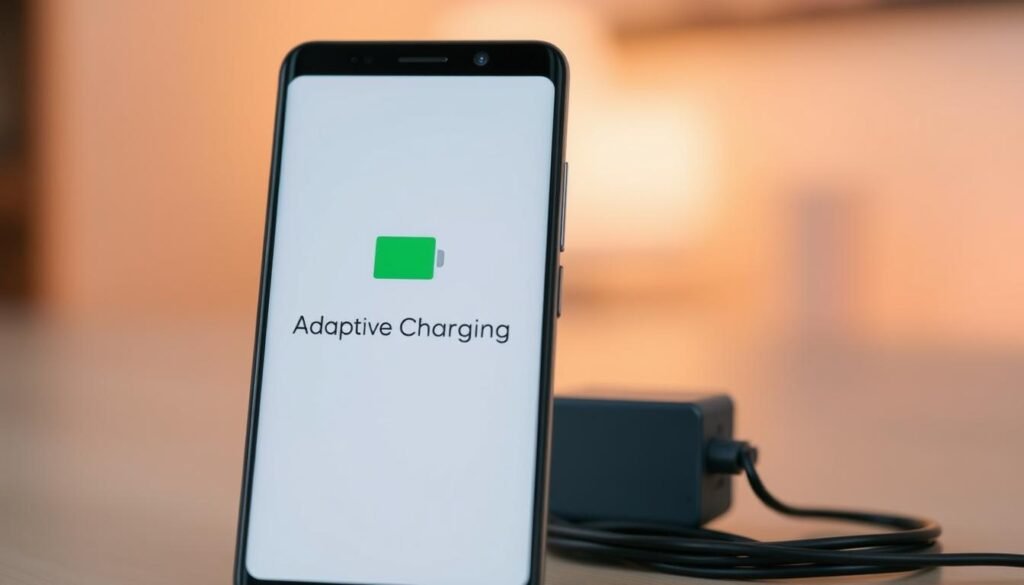
For even more control, some phones let you manually set a charging limit at 80%. This is a great option if you prioritize long-term battery life over a full charge every day.
Practical Tips for Better Overnight Charging Practices
Small adjustments to your environment and settings make a real difference. Heat is a battery’s biggest enemy.
Consider these easy steps to keep your phone cool and healthy:
- Turn off fast charging at night. Since you have plenty of time, a slower charge generates less heat.
- Always place your device on a hard, cool surface. Avoid soft beds or under pillows where heat can build up.
- Close background apps before bed. This reduces energy use and minimizes trickle charging cycles.
Remember, your battery is rated for a certain number of full cycles—like 1,000 for iPhones. Consistent, gentle care over time is what truly preserves its life.
Conclusion
Modern smartphone batteries are surprisingly resilient power systems. Your device has intelligent safeguards that make leaving it plugged in fundamentally safe.
While keeping your phone at full capacity for extended periods isn’t ideal, the impact unfolds over years, not weeks. Most people upgrade their smartphone before noticing significant battery wear.
Manufacturers build in protection. Features like adaptive charging delay the final charge until morning. A wireless charger can be a gentler option due to its slower speed.
Use your phone’s built-in tools. Keep it cool and enable smart features. If your phone battery health declines after several cycles, replacement is an affordable way to extend your device‘s life.
We recommend a balanced approach. Trust the technology, use smart habits, and enjoy the convenience of a ready smartphone each morning.
FAQ
Does charging my phone overnight really damage the battery?
Yes, leaving your device plugged in after it reaches 100% can cause long-term harm. Modern smartphones use lithium-ion batteries, which degrade faster when kept at full capacity for extended periods, especially if heat builds up. This process slowly reduces your battery’s overall lifespan.
What is the best way to charge my phone to preserve battery life?
We recommend keeping your battery level between 20% and 80% for daily use. Avoid letting it drain to zero or sit at 100% for hours. Using features like adaptive charging, which slows down the power flow as the battery nears full capacity, can also help maintain health over the years.
Is wireless charging worse for my phone’s battery than using a cable?
Wireless charging can generate more heat than wired methods, and excess heat is a primary factor in battery degradation. While convenient for short top-ups, we suggest using a cable for overnight power sessions to better manage temperature and protect your phone’s long-term performance.
Can fast charging harm my smartphone’s battery capacity?
Frequent use of fast charging can contribute to wear over time because it pushes more power into the battery quickly, increasing heat. It’s a useful feature when you’re in a hurry, but for regular overnight charging, a standard, slower charger is gentler on your device’s power cell.
How much does battery capacity typically decrease over one year?
Most lithium-ion batteries will naturally lose about 10-20% of their original capacity after a year of typical use. Habits like stopping overnight charging and avoiding extreme temperatures can help you stay at the lower end of that range and extend your phone’s usable life.