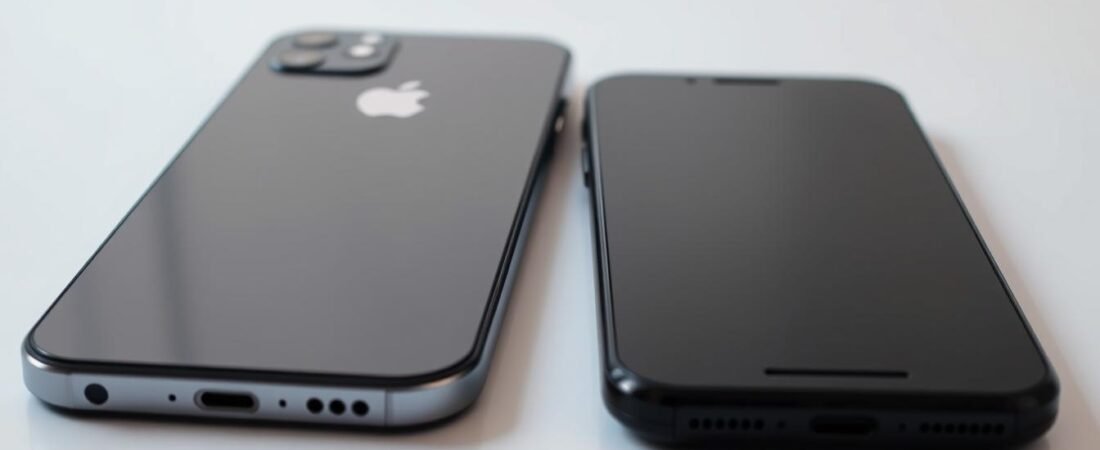
Choosing a new smartphone is a big decision for any student. Your budget is tight, and every dollar matters. We want to help you cut through the noise and focus on what’s truly important: your wallet.
This guide isn’t about which device has the flashiest camera. We’re diving deep into the real costs of each ecosystem. We’ll look at everything from app spending to long-term value.
Recent data reveals a fascinating story. While one platform has a larger global market share, its users spend significantly less per month. This spending habit directly impacts your experience as a student.
We’ve analyzed the numbers to give you a clear picture. Our goal is to show you the smartest financial path for your unique situation over time.
Key Takeaways
- This comparison focuses on long-term financial impact for students, not just upfront device cost.
- User spending patterns differ greatly between the two major mobile ecosystems.
- Hidden costs, like accessories and app subscriptions, are crucial to consider.
- The resale value of your device is an important part of the total cost of ownership.
- Your choice will affect your daily digital experience and budget management.
- We provide data-driven insights to help you make the most informed decision.
Understanding the Current Smartphone Landscape
Today’s smartphone ecosystem reveals unexpected patterns that challenge simple assumptions about value. The global market share tells one story, but consumer spending tells another entirely.
Android commands approximately 71% of worldwide device usage, while the other major platform holds about 29%. This massive difference in user base might suggest an obvious choice for budget-conscious students.
However, the spending data reveals a surprising twist. Despite having fewer users overall, one app store generated $87 billion compared to the other’s $48 billion. This means the average consumer spends significantly more within one ecosystem.
The market dynamics vary greatly by region too. In the United States, the balance has shifted dramatically with one platform now holding over 58% market share. Meanwhile, growth patterns differ in emerging markets where price sensitivity dominates.
For students, these trends matter profoundly. Your choice connects you to a specific community of users and affects everything from app availability to accessory pricing. Both platforms are investing heavily in features that benefit academic life.
We see enhanced security for protecting coursework and AI tools for productivity. The competitive landscape means continuous improvements, but the real question is which platform delivers actual savings for students on tight budgets.
iPhone vs Android: Key Differences for Budget-Conscious Students
The spending habits across different mobile ecosystems tell a compelling story for budget-minded students. We’re looking beyond surface-level features to uncover what really impacts your wallet.
Comparing In-App Revenue and User Spending
One of the most striking differences emerges in how much each user spends. Recent data shows Apple app store customers average $10.40 monthly on app purchases. Meanwhile, Google Play users spend just $1.40.
This spending gap suggests different platform cultures. Students who rarely buy apps might find Android’s ecosystem more budget-friendly. However, higher spending could indicate better app quality that users find valuable.
Market Share and Device Popularity Insights
Market dynamics reveal interesting patterns for student life. Younger demographics show stronger preference for one platform, with 44% of 18-29 year olds choosing it versus 30% for the alternative.
These popularity differences affect your academic experience. If most classmates use specific communication apps, your choice matters for group projects. Both platforms maintain impressive loyalty rates above 85%.
The operating system you choose often becomes a long-term commitment. This makes your initial decision crucial for financial planning throughout your student years.
Assessing Cost and Budgeting Factors
Smartphone affordability isn’t just about the purchase price—it’s about how your investment performs over your academic journey. We need to examine both immediate costs and long-term financial implications.
Price Points and Affordability Considerations
The price range for mobile phones varies dramatically. One platform offers budget options under $150, while the other starts at a higher entry point but includes more affordable models.
For students, this approach to pricing means different budgeting strategies. The initial cost is just one part of the equation.
We recommend considering how long you plan to keep your phones. Over several years, the total cost of ownership becomes more important than the sticker price.
Resale Value and Longevity of Devices
Long-term value is crucial for student budgets. Some devices receive software updates for 5-7 years, while others typically get 2-3 years of support.
This difference significantly impacts resale value. A three-year-old device from one platform retains much more value than comparable models.
The quality of construction and consistent software support create a smarter way to budget over time. Your phone becomes a more reliable academic tool throughout your college experience.
User Experience: Ease of Use, Performance, and Security
Your phone’s daily performance and security directly impact your academic workflow and budget. We examine how each platform handles real student needs.
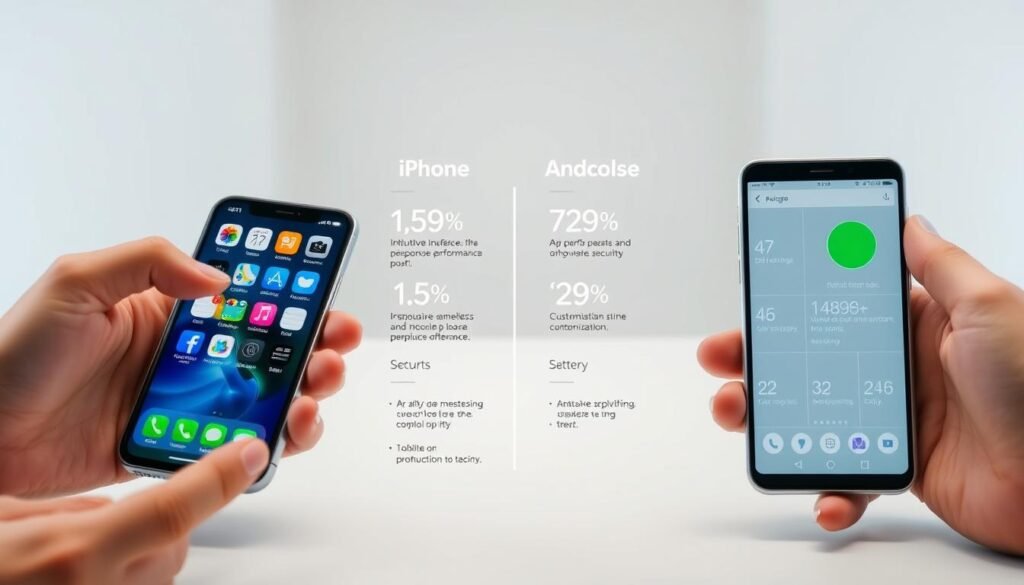
The overall user experience differs significantly between ecosystems. One offers simplicity while the other provides customization freedom.
Intuitive Interface vs. Customization Flexibility
One operating system is famous for its “it just works” approach. Students appreciate the minimal setup time and consistent interface.
The alternative platform allows deep customization of your home screen and settings. This flexibility requires more initial configuration time.
Performance Stability and Software Updates
Performance consistency matters during exams and deadlines. One system maintains smooth operation throughout the device’s lifespan.
Budget devices on the other platform may experience lag over time. Software support duration also varies dramatically between ecosystems.
Enhanced Security Measures and Data Protection
Security is crucial for protecting academic work and personal data. One platform uses hardware-level encryption and strict app vetting.
The other system offers more app sources but increased vulnerability risks. Data recovery rates after security incidents differ significantly.
| Feature | Platform A | Platform B |
|---|---|---|
| Interface Learning Curve | Minimal setup required | Customization options available |
| App Stability | Rare crashes reported | Varies by device manufacturer |
| Security Updates | 5-7 years support | 2-3 years typical support |
| Data Protection | Hardware-level encryption | Depends on device security features |
| Malware Risk | Lower due to closed ecosystem | Higher with third-party apps |
These features collectively shape your daily experience as a student. The right balance depends on your technical comfort and academic needs.
Exploring Ecosystem and App Store Benefits
Your mobile ecosystem choice creates a powerful ripple effect throughout your student experience. We examine how device integration and app availability impact both your productivity and budget.
Seamless Ecosystem Integration and Device Synergy
Apple’s tightly integrated ecosystem creates remarkable synergy across multiple devices. Features like Handoff and AirDrop allow seamless transitions between iPhone, iPad, and Mac.
This convenience comes with commitment to Apple’s exclusive services. Students gain productivity benefits but face potential lock-in effects.
Android offers flexibility across different manufacturers’ devices. Google’s services work consistently whether you choose Samsung, Google, or other brands.
App Store Quality vs. Google Play Store Variety
The Apple App Store maintains stricter quality control with 1.6 million apps. This results in more polished experiences but fewer choices.
Google Play Store provides broader access to 3.55 million apps. Students enjoy more experimental options and free alternatives.
Each store serves different user preferences. Your choice depends on whether you prioritize quality or variety in educational apps.
Hardware, Software, and Customization Compared
Your smartphone’s core components—the processor, operating system, and customization options—shape both daily performance and financial longevity. We’re examining how these technical differences impact your student budget over time.
The hardware software integration represents a key advantage for one platform. Designing both the processor and operating system together creates optimization that keeps devices running smoothly for 4-5 years. This extends your investment’s lifespan significantly.
Android devices offer incredible variety in hardware specifications. Students can choose from different screen sizes, battery capacities, and specialized features. This freedom lets you prioritize what matters most for your academic needs.
Customization capabilities differ dramatically between platforms. Android offers nearly unlimited personalization options, from home screen layouts to custom operating systems. The alternative platform maintains a more controlled environment with consistent experience across all devices.
Screen technology and battery considerations vary widely across different Android devices. Some models allow battery replacement and storage expansion, potentially extending device life. The unified update system on the other platform ensures all compatible devices receive timely software updates simultaneously.
These hardware and software differences fundamentally impact long-term value. Your choice affects how long your device remains useful throughout your college journey.
User Demographics and Consumer Behavior Trends
Who you’ll find using each platform reveals fascinating spending patterns that impact student budgets. We see distinct profiles emerge when examining typical users and their financial habits.
Recent surveys show a noticeable income difference between user groups. One group averages $53,251 annually compared to $37,040 for the other. This doesn’t mean one phone is only for wealthy people. It reflects different spending priorities that students should understand.
Spending Habits and Loyalty Insights Among Students
Younger users aged 18-29 show a clear preference, with 44% choosing one platform versus 30% for the other. This creates interesting social dynamics on college campuses.
Loyalty rates are remarkably high for both ecosystems. Over 90% of users on one platform never switch after their first purchase. The other platform maintains 91% loyalty through different appeals.
These patterns matter because switching later involves more than just buying a new device. Students might need to repurchase apps and learn new interfaces.
| Behavior Pattern | Platform A Users | Platform B Users |
|---|---|---|
| Average Monthly App Spending | $10.40 | $1.40 |
| Upgrade Frequency | 54% yearly, 22% every 2 years | More varied upgrade cycles |
| Primary Switching Reason | Better features (25%) | Affordability (29%) |
| Emotional Attachment | Strong cultural connection | Practical appreciation for choice |
Understanding these consumer trends helps students make decisions based on real needs rather than social pressure. Your phone choice should match your financial situation and personal values.
Future Predictions and Emerging Mobile Trends
Future mobile developments could significantly impact the value proposition for budget-conscious students. We’re looking at how upcoming innovations might affect your device’s longevity and usefulness throughout your college years.
The mobile landscape continues evolving with exciting new technology on the horizon. Both major platforms are pushing boundaries in different ways that could influence student choices.
Foldable Innovations and Future Design Shifts
Foldable phones represent the most dramatic design change in years. Android manufacturers already offer multiple generations of these innovative devices.
Apple appears to be waiting until 2026 or later to enter this space. This gives Android a clear advantage in cutting-edge features for now.
However, current foldable phones carry premium price tags that exceed most student budgets. Durability concerns also remain unresolved for daily campus use.
Advances in AI and Processor Performance
Artificial intelligence integration is accelerating differently on each platform. Google aggressively implements AI features in Pixel smartphones for photo enhancement and voice assistance.
Apple takes a more cautious approach with privacy-focused, on-device processing. Both iphones and Android devices will see significant AI improvements in their operating systems.
Processor advancements continue to push performance boundaries. The latest chips deliver better energy efficiency and graphics capabilities. This means your smartphone will handle demanding academic apps more smoothly.
For students, these trends mean both platforms will continue serving different user priorities. The way forward involves smarter hardware that adapts to your academic needs.
Conclusion
Making the right smartphone choice comes down to your personal priorities and financial plan. We’ve explored how each platform offers distinct advantages for students.
Your decision impacts everything from monthly app spending to long-term device value. The differences between ecosystems are significant.
Consider your budget, technical comfort, and how long you’ll keep your phone. Both devices can serve you well when chosen thoughtfully.
The right approach matches your user needs with the ecosystem that supports them best. Your experience matters most.
We hope this guide helps you make a confident choice that saves money over time. Your education deserves a reliable partner.
FAQ
Which operating system generally offers more affordable devices for students?
Android devices typically provide a wider range of budget-friendly options. Brands like Samsung, Infinix, and Redmi offer smartphones at various price points, making them accessible for students. While Apple’s iPhones have a higher starting cost, their longevity can be a value consideration over time.
How do the app stores differ in terms of app quality and variety?
The Apple App Store is known for its strict review process, which often results in high-quality, polished apps. The Google Play Store offers a wider variety of applications, including more free and ad-supported options, which can be beneficial for students looking to minimize spending.
Which platform offers better customization and user control?
Android offers significantly more flexibility for customization. Users can change launchers, widgets, and system-wide themes to personalize their experience. iPhones provide a more uniform, consistent user experience with less system-level customization available to the average user.
What about the long-term software support and security updates?
Apple is renowned for providing many years of iOS updates for its older models, enhancing device longevity. The update process is also straightforward. For Android, update support varies greatly by manufacturer and model, with Google Pixel devices typically receiving the longest and most timely support.
How does the ecosystem integration compare between the two platforms?
Apple’s ecosystem is highly integrated; iPhones work seamlessly with other Apple products like MacBooks, iPads, and Apple Watch. The Android ecosystem is more open, allowing for integration with a wide array of devices from different manufacturers, though the experience may not be as tightly unified.
Which smartphone holds its value better for potential resale?
iPhones generally have a stronger resale value compared to most Android phones. Their reputation for quality and long-term software support helps them retain value over time, which can be a financial advantage if you plan to upgrade your device in a few years.