
We’re excited to share our first look at the newest flagship device making waves in the mobile world. This premium smartphone was just unveiled at Mobile World Congress in Barcelona, marking its global debut.
This model builds on last year’s success with meaningful upgrades across the board. We’ll explore how it performs in real-world conditions and whether it justifies its premium price point.
From its impressive camera system to its sleek design, this device aims to compete with the best. Our review will give you honest insights to help make an informed decision.
Whether you love photography or need top-tier performance, we’ve got you covered. Stay with us as we unpack everything this remarkable device offers.
Key Takeaways
- Global version announced at Mobile World Congress with European availability
- Premium pricing positioned against other flagship smartphones
- Significant camera improvements for better photos in various lighting
- Enhanced battery life and IP68 rating for durability
- Powerful hardware and processing capabilities
- Not available in the US market despite global launch
- Builds upon previous model’s success with key upgrades
Introduction: Why the Xiaomi 15 Ultra Stands Out
Flagship smartphones keep getting better each year. This new model takes things to another level with smart improvements across the board.
We’ve spent time testing this device in various conditions. Its blend of hardware and software creates a remarkable user experience.
Unpacking the Hype Around Xiaomi’s Latest Flagship
Tech enthusiasts are buzzing about this release for good reason. It combines powerful performance with innovative camera capabilities.
The Snapdragon 8 Elite processor delivers exceptional speed. AI enhancements bring new functionality to photography and daily tasks.
This model builds on a strong foundation from previous years. It refines what worked while adding meaningful upgrades.
Key Upgrades from the Xiaomi 14 Ultra
Several improvements make this version stand out from its predecessor:
- Enhanced processing power with the latest Snapdragon chipset
- Advanced AI features for smarter photo processing
- Optimized camera system with software improvements
- Better battery life through efficient power management
The main camera uses the same excellent Sony sensor. However, software now handles what hardware did before.
Fixed aperture replaces the variable system from last year’s model. Computational photography achieves similar depth and lighting effects.
New AI tools help with image enhancement and creative editing. These features keep pace with what rivals like the Samsung Galaxy S25 Ultra offer.
Overall, these changes create a more polished experience. The device maintains its photography leadership while improving other areas.
Design and Build: Aesthetics Meets Durability
Building a premium smartphone requires balancing aesthetic appeal with practical durability. This latest flagship achieves this balance in interesting ways that prioritize camera performance above all else.
We’ve spent considerable time examining how this device feels in hand. The materials and construction quality reflect its premium positioning in the market.
The Controversial Camera Module Design
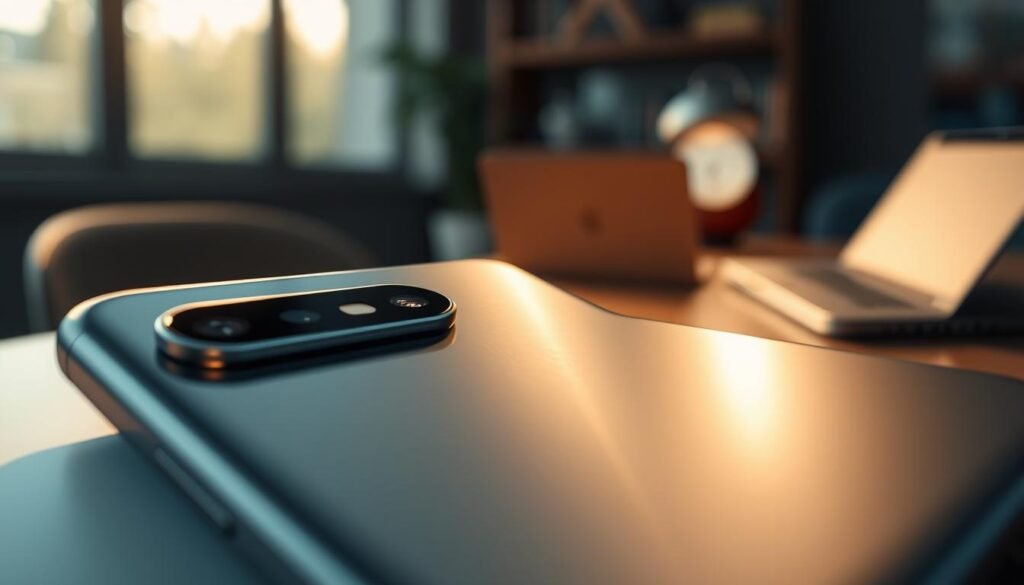
The most striking feature is undoubtedly the massive camera housing on the back. This asymmetrical design dominates the device’s appearance and has sparked much discussion.
Some users find the large module visually challenging. Others appreciate how it signals the device’s photographic capabilities.
Despite polarizing opinions, the design serves a functional purpose. It accommodates advanced camera hardware that delivers exceptional image quality.
The module houses multiple lenses and sensors in an innovative layout. This arrangement optimizes space while maintaining a relatively slim profile.
IP68 Rating and Material Quality
Durability receives significant attention with this model. The IP68 certification means it can withstand water immersion and dust exposure.
This rating provides peace of mind for daily use. You won’t worry about accidental spills or outdoor adventures.
Material selection reflects premium standards throughout. Reinforced glass protects the display while maintaining excellent touch responsiveness.
The frame feels solid and well-constructed. It provides structural integrity without adding excessive weight.
Compared to other flagship devices, this model offers distinctive styling. The design choices clearly prioritize camera performance over conventional aesthetics.
Handling remains comfortable despite the prominent camera array. The weight distribution feels balanced during extended use.
Overall build quality ensures reliable performance over time. This device can handle the demands of active lifestyles while maintaining its premium appearance.
Camera System: Photographic Powerhouse
Photography enthusiasts will find plenty to love about this flagship device. The camera setup represents a significant leap forward in mobile imaging technology.
We tested this system across various shooting scenarios. It consistently delivers professional-grade results that rival dedicated cameras.
Main Camera: Sony LYT-900 Sensor Performance
The primary shooter uses the same excellent Sony LYT-900 sensor from last year. However, it now features a fixed f/1.6 aperture for better light capture.
This combination produces stunning images with exceptional detail. Colors appear vibrant and true to life in most lighting situations.
Exposure management handles challenging backlighting beautifully. Shadows retain detail while highlights never appear blown out.
Ultrawide and Telephoto Lenses: Versatility in Shots
Ultrawide photography sees some interesting changes this year. The aperture has been adjusted from f/1.8 to f/2.2.
This modification affects low-light performance slightly. However, daytime shots remain impressively sharp from edge to edge.
Telephoto capabilities provide excellent framing options. You can capture distant subjects with remarkable clarity.
New 200MP Periscope Zoom: Details at a Distance
The new periscope zoom represents a major advancement. Its 200MP sensor captures incredible detail at 4.3x optical magnification.
This feature excels in wildlife and sports photography. You can isolate subjects from surprising distances without quality loss.
Digital zoom extends this capability even further. Images remain usable at much higher magnification levels than previous models.
Night Mode: Low-Light Photography Excellence
Low-light performance has received significant software enhancements. Night mode now produces cleaner images with minimal noise.
Starburst effects around light sources are now software-generated. This approach maintains artistic flair while improving overall image quality.
The system handles mixed lighting conditions expertly. Colors remain accurate even in challenging nighttime environments.
Leica’s involvement brings distinctive color profiles to the table. The high-contrast black and white mode adds artistic depth to monochrome shots.
Compared to the Samsung Galaxy S25 Ultra, this system holds its own beautifully. It particularly excels in color accuracy and zoom capabilities.
Overall, this camera phone delivers exceptional versatility. It handles everything from casual snapshots to professional photography with equal competence.
Performance and Hardware: Snapdragon 8 Elite Dominance
Performance testing reveals why this device deserves consideration among top-tier mobile options. The Snapdragon 8 Elite chipset delivers exceptional speed across all usage scenarios.
We put this hardware through extensive real-world testing. It consistently impressed with its responsive performance and thermal management.
Benchmark Scores and Real-World Usage
Benchmark numbers tell only part of the story. While scores are impressive, daily operation feels even better than numbers suggest.
App launches happen instantly with no noticeable delay. Multitasking between applications feels completely seamless.
The processor handles complex tasks without breaking stride. Photo processing happens quickly even with large files.
Compared to other flagship phones, this model maintains consistent performance. It doesn’t throttle significantly during extended use.
Gaming and Multitasking Capabilities
Gaming performance stands out as particularly impressive. Demanding titles run smoothly at maximum settings.
Games like Genshin Impact maintain stable frame rates. The experience feels comparable to dedicated gaming devices.
Multitasking capabilities benefit from generous RAM allocation. Switching between apps happens without reloading content.
This hardware supports advanced AI features we’ll explore later. The chipset optimizes both generative text and image tools.
Battery life remains solid during intensive gaming sessions. While not class-leading, endurance meets most users’ needs.
Fast charging options provide quick power top-ups when needed. You can get hours of use from just minutes of charging.
When compared to rivals like the Samsung Galaxy S25 Ultra, this device holds its own. It offers excellent value for the performance package.
Software and AI Features: HyperOS and Gemini Integration
Beyond impressive specs, what truly separates flagship models is their software ecosystem and smart capabilities. We explore how this device combines Android 15 with custom enhancements and artificial intelligence tools.
The integration creates a modern user experience that feels both familiar and innovative. It balances Google’s clean foundation with manufacturer-specific optimizations.
Android 15 and HyperOS User Experience
This model runs the latest Android 15 operating system with HyperOS layered on top. The combination delivers a smooth, responsive interface that handles daily tasks effortlessly.
HyperOS adds useful functionality while maintaining Android’s core principles. Some users might find the preinstalled applications excessive compared to stock Android.
Customization options feel slightly reduced from previous versions. The trade-off brings better optimization and battery life management.
Overall performance remains excellent despite these minor limitations. The software feels polished and well-integrated with the hardware.
AI Tools: Generative Text and Image Processing
Artificial intelligence features represent a significant part of the modern smartphone experience. This device incorporates Google’s Gemini AI for various smart functions.
Generative text tools help create content quickly for messages or documents. Voice transcription converts speech to text with impressive accuracy.
Image processing capabilities include expansion and object removal features. These tools work well for enhancing photos or fixing minor issues in shots.
All AI functions require an internet connection to access cloud processing. This limitation affects usability in areas with poor network conditions.
Software Support: Update Policy Compared to Rivals
Long-term software support has become increasingly important for premium devices. This model offers four generations of OS updates and six years of security patches.
This commitment provides decent coverage for most users’ upgrade cycles. However, it falls short of what some competitors provide in the same price range.
Compared to the Samsung Galaxy S25 Ultra’s seven-year promise, this policy seems less comprehensive. Google’s Pixel devices also typically offer longer support periods.
The update schedule ensures the device remains secure and functional for years. Still, buyers seeking maximum longevity might consider alternatives.
Overall, the software package delivers a feature-rich experience with some compromises. AI integration adds modern convenience despite connectivity requirements.
Battery Life and Charging: All-Day Endurance
Battery performance separates practical devices from theoretical spec sheets. We tested this flagship’s 5,410mAh capacity across various usage scenarios to assess real-world value.
Most users will find the endurance perfectly adequate for daily needs. It handles moderate use without requiring midday top-ups.
Video Streaming and Usage Tests
Streaming tests show competitive performance against other premium models. Continuous video playback lasts significantly longer than some rivals offer.
The device outperforms the OnePlus 13 in streaming duration tests. However, it falls short of the Galaxy S25 Ultra’s exceptional battery life.
Mixed usage patterns yield about one full day of operation. This includes social media, messaging, and occasional photography.
Heavy users might need overnight charging to maintain consistent performance. Power users should plan accordingly for their daily routines.
90W Wired and 80W Wireless Charging Speeds
Charging capabilities represent a standout feature of this package. The 90W wired charging replenishes the battery remarkably fast.
You can gain hours of usage from just minutes of charging time. This convenience helps offset any endurance limitations during heavy use days.
Wireless charging supports up to 80W speeds with the official charger. Standard Qi pads deliver significantly slower charging rates.
The combination of decent battery life and rapid charging creates a practical solution. Most users will appreciate the flexibility this offers.
Compared to other flagships, the charging speeds are genuinely impressive. They provide tangible benefits for people with active lifestyles.
Overall, the power management system delivers a balanced experience. It might not lead all categories but offers reliable daily performance.
Xiaomi 15 Ultra vs. Samsung Galaxy S25 Ultra: Head-to-Head Showdown
When two premium flagships compete, every detail matters. We compared these devices side-by-side to see which offers better value.
Our testing covered photography, performance, and everyday usability. Both devices impress, but one emerges as the better choice for specific users.
Camera Comparison: Main, Zoom, and Low-Light
The main camera battle reveals clear differences. Both use excellent sensors, but processing creates distinct results.
Xiaomi’s LYT-900 sensor captures incredible detail. Colors appear more natural across various lighting conditions.
Samsung’s images sometimes show haze in detailed areas. This affects texture reproduction in certain shots.
Zoom capabilities favor the Xiaomi model significantly. Its 200MP periscope lens delivers cleaner long-distance photos.
Low-light photography shows another advantage for Xiaomi. Night mode produces less noise while maintaining better color accuracy.
The Samsung Galaxy S25 Ultra struggles with blur in challenging light. Details get lost where Xiaomi preserves them beautifully.
Performance and Value Analysis
Both phones share the same Snapdragon 8 Elite processor. Daily performance feels nearly identical in most tasks.
Gaming and multitasking run smoothly on both devices. You won’t notice performance differences during regular use.
Value consideration becomes the deciding factor. Xiaomi offers better photography at a more competitive price point.
Software support differs between these rivals. Samsung promises longer update support for its flagship model.
Battery life is comparable between both devices. Each lasts a full day with moderate to heavy usage patterns.
Build quality and IP68 rating match expectations. Both feel premium and withstand daily wear beautifully.
| Feature | Xiaomi 15 Ultra | Samsung Galaxy S25 Ultra |
|---|---|---|
| Main Camera Quality | Excellent detail, natural colors | Good, occasional haze issues |
| Zoom Performance | Superior 200MP periscope | Good but less detailed |
| Low-Light Photography | Cleaner images, better colors | More noise, some blur |
| Processing Power | Snapdragon 8 Elite | Snapdragon 8 Elite |
| Software Updates | 4 years OS, 6 years security | 7 years full support |
| Price Value | Better photography value | Higher price, longer support |
Photography enthusiasts will prefer the Xiaomi model. Its camera system delivers consistently better results.
Users wanting longer software support might choose Samsung. Its seven-year update promise provides peace of mind.
Both phones represent excellent choices in the premium segment. Your specific needs will determine the better option.
Conclusion: Is the Xiaomi 15 Ultra Worth the Investment?
We’ve tested this model thoroughly across all key areas. It stands as a strong contender in the premium smartphone market.
Its camera system truly shines. You get exceptional photos in various lighting conditions. The periscope zoom delivers impressive detail from a distance.
Performance remains top-notch with powerful hardware. Battery life handles daily use comfortably. Rapid charging keeps you going when needed.
However, the design polarizes some users. Software support falls short of some rivals like the Galaxy S25 Ultra.
If photography matters most, this device offers excellent value. It delivers professional-grade shots without compromise.
For those prioritizing longer update cycles or different aesthetics, consider alternatives. Otherwise, this model represents a fantastic choice for photography enthusiasts.
FAQ
What makes the camera system on the Xiaomi 15 Ultra special?
It features a Sony LYT-900 main sensor, a new 200MP periscope zoom lens, and excellent low-light capabilities, making it a versatile powerhouse for all photography conditions.
How does the performance compare to other flagship phones?
With the Snapdragon 8 Elite chipset, it delivers top-tier benchmark scores, smooth gaming, and efficient multitasking, often outperforming rivals like the Samsung Galaxy S25 Ultra.
Does it support fast charging?
Yes, it offers 90W wired and 80W wireless charging, providing some of the fastest power top-ups available in a smartphone today.
What software does it run?
It comes with Android 15 and Xiaomi’s HyperOS, which includes useful AI tools for text and image processing, along with reliable update support.
Is the build quality durable?
Absolutely. It has an IP68 rating for water and dust resistance, along with premium materials that ensure it stands up to daily use.
How does the battery life hold up?
In tests, it provides all-day endurance even with heavy use, such as video streaming or photography, reducing the need for frequent charging.
What is the zoom capability like?
The 200MP periscope zoom allows for incredibly detailed shots at a distance, outperforming many competitors in clarity and color accuracy.
How does it compare to the Samsung Galaxy S25 Ultra?
It often matches or exceeds the Galaxy S25 Ultra in camera performance, processing power, and charging speed, while offering strong value.