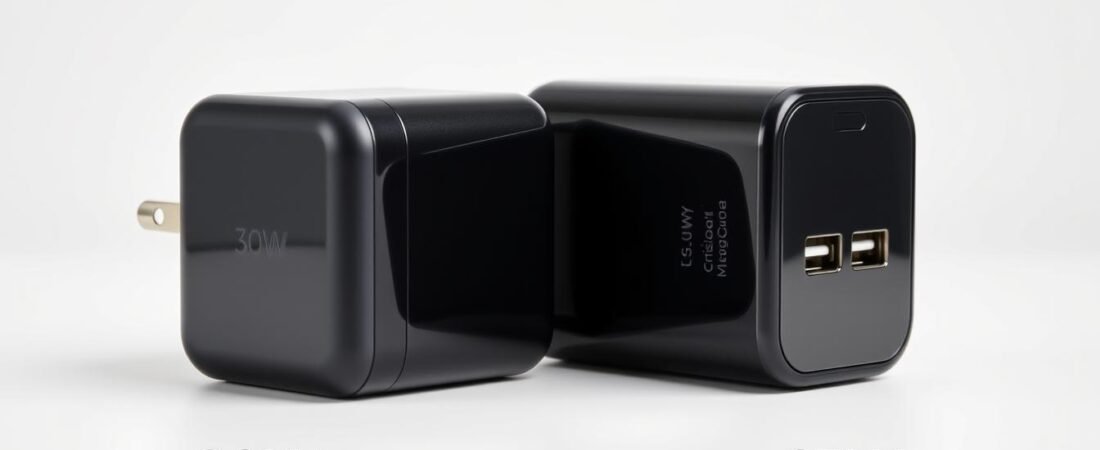
Welcome to our guide on power adapters! Many people feel confused about wattage ratings and what they really mean for your devices.
We’re here to clear up the confusion around charging technology. A higher number doesn’t always mean better performance for your mobile phone.
Understanding your device’s needs is crucial for battery health and charging speed. The right power adapter can make a significant difference in your daily routine.
We’ll explore how various wattages work with different phones and why matching matters. This knowledge helps you make smart choices without overspending.
Key Takeaways
- Wattage numbers don’t always equal faster charging for every device
- Your phone’s capabilities determine the optimal charging speed
- Higher wattage adapters can be overkill for some mobile devices
- Battery health depends on using appropriate charging technology
- Matching your charger to your device’s needs saves time and money
- The right choice balances speed with device protection
Why Wattage Matters in Fast Charging Technology
Understanding power ratings helps you make smarter decisions about your gadgets. We often see numbers like 30W or 65W on adapters, but what do they truly mean for your daily use?
These wattage figures represent the maximum power output a unit can provide. However, your phone or tablet only draws what it needs for optimal operation.
The Science Behind Charging Speed and Efficiency
Wattage combines voltage and current to determine how quickly energy transfers to your batteries. Think of it like water flowing through a pipe – more pressure and volume means faster filling.
Modern smartphones communicate with adapters through Power Delivery protocols. This negotiation ensures devices receive exactly what they can handle for efficient charging.
Higher wattage units can potentially reduce your waiting time. But this only happens when your gadget supports those increased power levels.
How Power Delivery Affects Your Device’s Battery Health
Consistent appropriate power flow minimizes heat generation during energy transfer. Excessive heat remains one of the biggest factors in long-term battery degradation.
Using an overpowered adapter won’t damage devices that support proper power management. Your phone’s internal circuitry regulates incoming energy to prevent overload.
However, mismatched combinations might cause slight temperature increases during operation. This makes selecting compatible equipment important for preserving battery lifespan.
| Device Type | Recommended Wattage | Actual Benefit | Heat Generation |
|---|---|---|---|
| Standard Smartphones | 18-25W | Optimal charging speeds | Minimal |
| Premium Phones | 45-65W | Maximum performance | Moderate |
| Tablets | 30-45W | Faster replenishment | Low |
| Laptops | 65W+ | Full operation while charging | Variable |
Common Misconceptions About Charger Wattage
Many believe higher numbers always mean quicker energy replenishment. In reality, your device’s capabilities determine the actual charging speeds you experience.
Another myth suggests powerful adapters can harm smaller gadgets. Modern protection circuits prevent overcharging regardless of adapter capacity.
Some users think all ports on multi-port units deliver full power simultaneously. Most models distribute total wattage across all active connections.
Always check your device specifications to understand its maximum power acceptance. This knowledge helps you select adapters that provide the best performance without unnecessary expenditure.
30W Chargers: The Balanced Power Solution
Not all charging solutions require maximum wattage to deliver excellent performance. Many users find that 30-watt units offer the perfect blend of speed, compatibility, and value for their daily needs.
These adapters provide sufficient power for most modern gadgets without the bulk or premium cost of higher-capacity models. They represent a smart middle ground that works well across various devices.
Ideal Devices for 30W Charging Speeds
Most Android smartphones work beautifully with 30-watt power delivery. Popular models like the Samsung Galaxy S24 support up to 25W, making a 30W adapter provide comfortable headroom.
Apple iPads and many tablets also benefit from this power level. Wireless earbuds and other accessories charge efficiently without overheating concerns.
Even some lightweight laptops like Chromebooks can operate well with 30-watt units. This makes them versatile companions for students and professionals alike.
Real-World Charging Performance Expectations
Testing shows impressive results with 30-watt adapters. Many phones reach 50% capacity in approximately 30 minutes from empty.
This speed proves perfect for quick top-ups during busy days. You get meaningful power boosts without long waiting periods.
Brands like Anker and UGreen offer reliable 30W models with excellent build quality. Their units maintain consistent performance across various devices.
| Device Category | Charging Speed | Time to 50% | Heat Level |
|---|---|---|---|
| Mid-Range Smartphones | 18-25W | ~30 minutes | Low |
| Tablets | 20-30W | ~45 minutes | Moderate |
| Wireless Earbuds | 5-10W | ~15 minutes | Minimal |
| Lightweight Laptops | 25-30W | Varies by usage | Medium |
When 30W Makes the Most Practical Sense
Students and commuters appreciate these adapters for their portability and efficiency. They provide enough power for on-the-go charging without excessive bulk.
Households benefit from multi-port 30W units that can handle several devices simultaneously. This eliminates the need for multiple wall adapters cluttering spaces.
Travel scenarios particularly suit 30-watt chargers due to their compact size and broad compatibility. They work well with various gadgets you might carry during trips.
The cost-effectiveness makes them attractive for budget-conscious users. You get solid performance without paying for unused capacity.
65W Chargers: Maximum Power for Demanding Users
High-performance electronics require robust energy solutions. We find that 65-watt units deliver exceptional capability for power-hungry gadgets.
These adapters represent the pinnacle of current power delivery technology. They serve users who need rapid replenishment for multiple devices simultaneously.
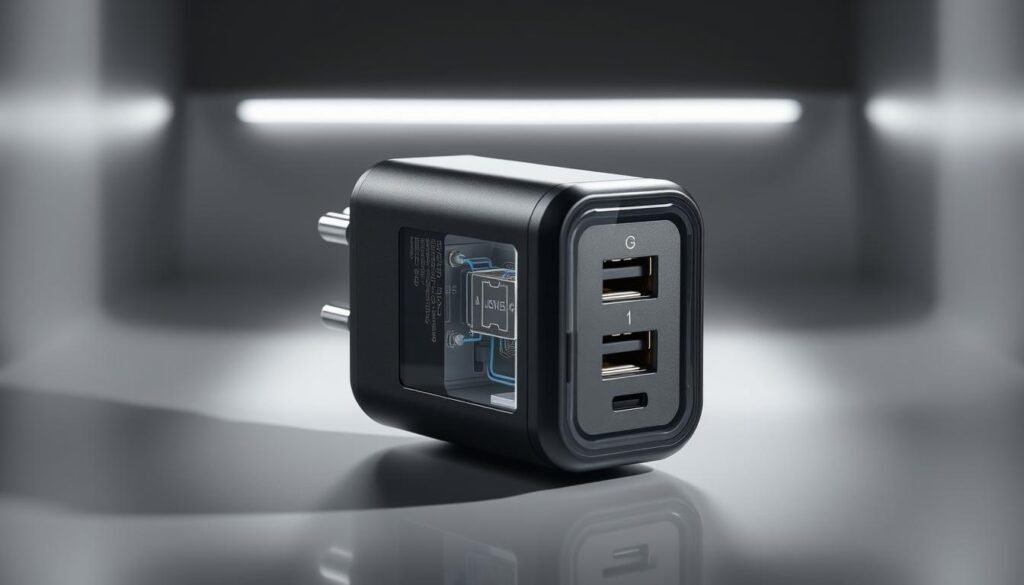
Devices That Truly Benefit from 65W Power
Flagship smartphones from Samsung and OnePlus achieve their fastest charging speeds with these units. Premium tablets and gaming devices also reach their full potential.
Modern laptops like MacBook Air models operate seamlessly while connected to 65-watt adapters. This eliminates performance throttling during intensive tasks.
Even proprietary fast charging systems benefit from compatible high-wattage units. A OnePlus 13 still gains significant speed advantages from 65W Power Delivery technology.
Simultaneous Multi-Device Charging Capabilities
Advanced power distribution makes these adapters incredibly versatile. They can dynamically allocate energy across multiple connected gadgets.
Imagine charging your laptop at 45W while your phone receives 20W simultaneously. This eliminates the need for separate wall adapters for each device.
Travelers and digital nomads appreciate this consolidated approach. One compact unit replaces several bulky OEM power bricks in your bag.
| Device Combination | Power Allocation | Charging Efficiency | Practical Benefit |
|---|---|---|---|
| Laptop + Phone | 45W + 20W | Optimal for both | Work continuity |
| Tablet + Earbuds | 30W + 5W | Rapid charging | Entertainment ready |
| Phone + Watch | 25W + 2.5W | Balanced flow | Morning routine |
| Gaming Phone + Controller | 50W + 15W | Maximum performance | Uninterrupted play |
The Gaming and Professional User Advantage
Serious mobile gamers appreciate sustained performance during extended sessions. High-wattage adapters prevent battery drain during resource-intensive gameplay.
Professionals working with demanding applications benefit from continuous power supply. Their laptops maintain full operation while charging rapidly.
Time savings become particularly noticeable with these powerful units. Many laptops reach full capacity in under sixty minutes from empty.
Built-in safety features like overheat protection ensure device security. Even at maximum output, temperature management remains effective.
While these adapters carry higher price points, they deliver exceptional value. Power users with multiple gadgets find the investment worthwhile for daily productivity.
Which Charger to Choose: 30W vs 65W – Fast Charge Myths Busted
We’ve reached the moment of truth in our power adapter journey. Many shoppers feel overwhelmed when facing the wattage decision between different models.
Let’s clear up confusion with practical comparisons and real-world testing results. Your perfect match depends on understanding both myths and realities about energy delivery.
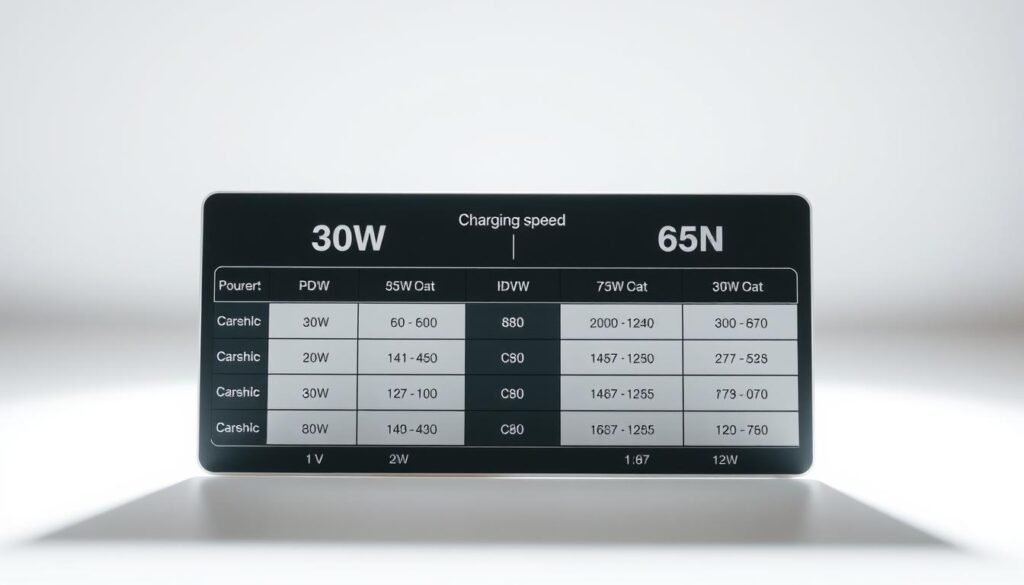
Myth Versus Reality: Charging Speed Comparisons
One common misconception suggests higher-wattage units always provide faster energy transfer. In reality, your gadget’s internal circuitry determines the maximum acceptable power intake.
We tested a Samsung Galaxy S24 with both 30W and 65W adapters. Both units delivered identical charging times because the phone’s maximum acceptance rate is 25W.
This demonstrates that extra wattage capacity provides no benefit when your mobile device can’t utilize it. The phone’s smart charging technology regulates incoming power perfectly.
Device Compatibility: What Actually Works With Each Wattage
Compatibility remains the most crucial factor in your selection process. Different electronics have distinct power requirements that affect their performance.
Standard smartphones and tablets work beautifully with 30-watt adapters. These include most iPhones, mid-range Android models, and popular tablets from various brands.
Higher-capacity 65W units prove necessary for laptops and multi-device charging scenarios. Gaming phones and professional workstations also benefit from this increased power delivery.
| Device Type | Recommended Wattage | 30W Performance | 65W Performance |
|---|---|---|---|
| iPhone 15 Series | 20-25W | Optimal | No extra benefit |
| Samsung Galaxy S24 | 25W | Perfect match | Identical speed |
| MacBook Air | 45-65W | Insufficient | Ideal performance |
| Gaming Phone | 50-65W | Limited speed | Maximum potential |
| Tablet + Phone Simultaneous | 45W+ | Struggles | Excellent distribution |
Cost Versus Performance: Value Analysis
Price differences between these adapter categories reflect their capabilities and construction quality. Budget-friendly 30W models like the Tunez W542 cost around $20 and deliver excellent value.
Premium 65W units from trusted brands like Anker Prime carry higher price tags but offer exceptional versatility. Their multi-device charging capabilities can replace several separate power bricks.
For users who primarily charge phones and tablets, the 30W category provides outstanding performance per dollar. The investment in higher-wattage models makes sense for laptop users and professionals with power-hungry gadgets.
Future-proofing might influence your decision, as emerging devices may support higher energy intake. However, current needs should guide your purchase since technology evolves rapidly.
We recommend assessing your typical usage patterns before selecting your perfect power solution. This ensures you get the best value without overspending on unnecessary capacity.
Practical Considerations for Your Charger Purchase
Making the right power adapter selection involves more than just wattage numbers. We want to help you consider all the practical factors that ensure optimal performance and safety for your electronics.
Your investment should provide reliable service while protecting your valuable gadgets. Let’s explore the key elements that separate excellent adapters from mediocre ones.
Understanding Your Device’s Maximum Charging Capacity
Every gadget has its own power acceptance limits that determine charging efficiency. Checking your device specifications prevents buying unnecessary capacity.
Apple iPhones typically support up to 20W power delivery for optimal performance. Samsung Galaxy models range between 25W and 45W depending on the specific device.
You can find this information in your device manual or on the manufacturer’s website. Knowing these numbers helps you select adapters that match your electronics perfectly.
Port Configuration and Cable Requirements
Modern adapters offer various port combinations that affect their versatility. USB-C ports generally support higher wattage output than older USB-A connections.
Multi-port units distribute their total power across all active connections. A 65W adapter with three ports might allocate 45W to one device and 20W to another.
Cable quality significantly impacts actual charging performance. High-wattage adapters require compatible cables to deliver their full potential.
For example, Samsung’s 45W charging needs a 5A-rated USB-C cable for maximum efficiency. Using inferior cables can reduce speed and generate excess heat.
Safety Features and Brand Reliability Factors
Protection systems are crucial for preventing damage to your valuable electronics. Look for adapters with over-temperature, over-voltage, and short-circuit protection.
Reputable brands like Anker and UGreen include multiple safety certifications in their products. These features ensure stable power delivery under various conditions.
Trusted manufacturers offer better build quality and warranty support than generic alternatives. Their products undergo rigorous testing for reliability and safety.
Investing in quality adapters protects your devices and batteries long-term. You avoid potential damage that could cost more than the initial savings from cheap units.
| Consideration | Budget Option | Premium Choice | Key Difference |
|---|---|---|---|
| Safety Certifications | Basic protection | Multi-layer safety | Comprehensive coverage |
| Cable Quality | Standard rating | High-current capable | Maximum performance |
| Port Configuration | Single USB-C | Multiple smart ports | Versatility |
| Warranty Period | 6-12 months | 18-24 months | Long-term assurance |
Travel-friendly designs with foldable plugs offer convenience for mobile users. Home users might prefer multi-port stations that handle several devices simultaneously.
Smart power distribution technology automatically allocates wattage based on connected devices’ needs. This ensures efficient charging without manual adjustments.
Always prioritize safety certifications and brand reputation when making your selection. These factors provide peace of mind while protecting your investment in technology.
Conclusion: Making the Right Charger Choice for Your Needs
Selecting the perfect power solution comes down to matching your specific gadgets and daily routine. Your mobile devices have unique power requirements that determine optimal performance.
Most users find 30-watt units provide excellent balance for phones and tablets. These adapters deliver great charging speed without unnecessary bulk or cost.
Power users with multiple gadgets benefit from 65-watt technology. These units handle laptops while simultaneously charging other electronics efficiently.
Always check your device’s maximum supported wattage before purchasing. This ensures you get the right performance without overspending. Quality adapters from trusted brands protect your battery and deliver reliable service for years.
FAQ
Can a 65W charger damage my phone or laptop?
No, modern devices with USB Power Delivery are designed to negotiate only the power they can handle. Your Samsung Galaxy, iPhone, or laptop will only draw up to its maximum supported wattage, keeping it safe.
Will a 30W charger work for my laptop?
It depends on your laptop’s power requirements. Many ultrabooks and smaller laptops can charge with 30W, though it may be slower than the included adapter. Always check your device’s specifications for compatibility.
Is there a big difference in charging speed between 30W and 65W?
For phones and tablets, the difference is noticeable but may not be dramatic. For larger devices like laptops, 65W offers significantly faster charging. The real advantage of 65W is its ability to handle high-demand gadgets and charge multiple devices at once.
Do I need special cables for a 65W charger?
Yes, to achieve full 65W charging speeds, you need a USB-C cable that supports higher power delivery. Standard or low-quality cables may not handle the wattage and can limit charging performance.
Can both 30W and 65W chargers support fast charging for smartphones?
Absolutely. Both adapters support fast charging technologies like Power Delivery. Your phone will only draw the power it’s designed for, so even with a 65W brick, a phone that maxes out at 25W will charge at that speed.
Which charger is better for battery health?
Both can be safe if they’re from reputable brands with built-in safety features. Battery health is more influenced by heat and charging habits than wattage alone. Efficient charging tech in quality adapters helps preserve battery life over time.
Are 65W chargers worth the extra cost?
If you own multiple gadgets, a laptop, or want faster top-ups, a 65W charger offers great value and versatility. For users with just a phone and maybe headphones, a 30W model is often more affordable and sufficient.