
We know how challenging it can be to find reliable digital resources for your academic work. That’s why we’ve created this comprehensive guide to help students and educators discover powerful solutions.
Our focus is on accessible platforms that enhance productivity without financial strain. These options are particularly valuable in educational settings where resources may be limited.
We’ve carefully selected each tool based on user-friendliness and real-world application. Our recommendations consider factors like internet accessibility and device compatibility relevant to various learning environments.
By the end of this guide, you’ll understand how to maximize these resources for group assignments, data organization, and engaging content creation. Stay connected with us for more tips through our social media channels.
Key Takeaways
- Discover cost-effective digital solutions for academic work
- Learn about trusted platforms with collaboration features
- Understand implementation strategies for different learning environments
- Gain insights on tools suitable for various skill levels
- Access recommendations backed by thorough testing and user feedback
Why Free Software Matters for Nigerian Students
Digital tools have become essential in modern education, yet many institutions face budget constraints. We believe every student deserves access to quality resources without financial barriers.
Research reveals that Nigerian education allocates less than 4% of expenditure to digital spending. This makes zero-cost solutions particularly valuable for academic success.
Cost-Effective Solutions for Education
Budget-friendly platforms help schools redirect funds to critical areas. Teacher training and infrastructure benefit when institutions save on digital tools.
Open source options provide excellent value. They eliminate licensing fees while delivering robust security through community-driven updates.
These alternatives often match paid versions in capabilities. Students gain access to professional-grade tools without the financial burden.
Accessibility and Flexibility Advantages
Cloud-based applications enable learning from anywhere. Students can continue their work even with limited internet connectivity.
Multiple device compatibility means learners aren’t restricted to specific hardware. A smartphone can often handle most academic tasks.
Customization allows institutions to adapt tools to their specific needs. This flexibility enhances the overall learning experience without additional costs.
Real-time collaboration features transform group project dynamics. Tools like Rocket.Chat support instant messaging and file sharing for seamless teamwork.
By embracing these resources, Nigerian students develop valuable tech skills early. This preparation makes them more competitive in global job markets.
Follow our social media channels for more insights on leveraging these tools effectively. We share practical tips and success stories regularly.
Essential Criteria for Choosing School Project Software
Making informed decisions about digital platforms significantly impacts project outcomes. We’ve identified key factors that determine whether a tool will enhance or hinder your academic experience.
These considerations help you select resources that match your specific needs. They ensure you spend time creating content rather than troubleshooting technical issues.
User-Friendliness and Learning Curve
Intuitive interfaces make all the difference in academic settings. Students should focus on their work, not struggle with complex menus.
We recommend platforms with clear navigation and built-in tutorials. Quick-start guides help beginners become productive faster.
Google Sheets demonstrates excellent ease of use with its drag-and-drop functionality. This eliminates the need for cut-and-paste operations that often confuse new users.

Collaboration Features for Group Projects
Teamwork capabilities transform how students approach group assignments. Real-time editing allows multiple users to contribute simultaneously.
Look for tools with chat functions and version history tracking. These features prevent confusion and ensure everyone stays on the same page.
Google Slides offers exceptional collaborative editing tools. Zoho Sheet provides similar functionality for spreadsheet work among team members.
Compatibility and File Sharing Options
Cross-platform functionality ensures your work remains accessible across devices. This is particularly important in Nigerian educational environments with varied technology access.
We prioritize tools that support common file formats like PDF, CSV, and PowerPoint. This prevents issues when submitting assignments or sharing with instructors.
LibreOffice Calc excels here with its native support for Excel files. However, it lacks the real-time collaboration found in cloud-based options.
Consider internet requirements versus offline functionality. Cloud platforms offer convenience, while desktop applications work better in areas with unreliable connectivity.
By evaluating these aspects, you’ll choose options that boost productivity. The right tools reduce frustration and enhance your final results.
Follow our social media for more comparison guides tailored to educational needs. We share practical insights on balancing advanced capabilities with simplicity.
Best Free Presentation Software for School Projects
Creating engaging visual content can transform how you share ideas in class. We explore platforms that help you build impressive slides without spending money.
Each option brings unique strengths to different academic scenarios. Your choice depends on whether you prioritize creativity, teamwork, or offline access.
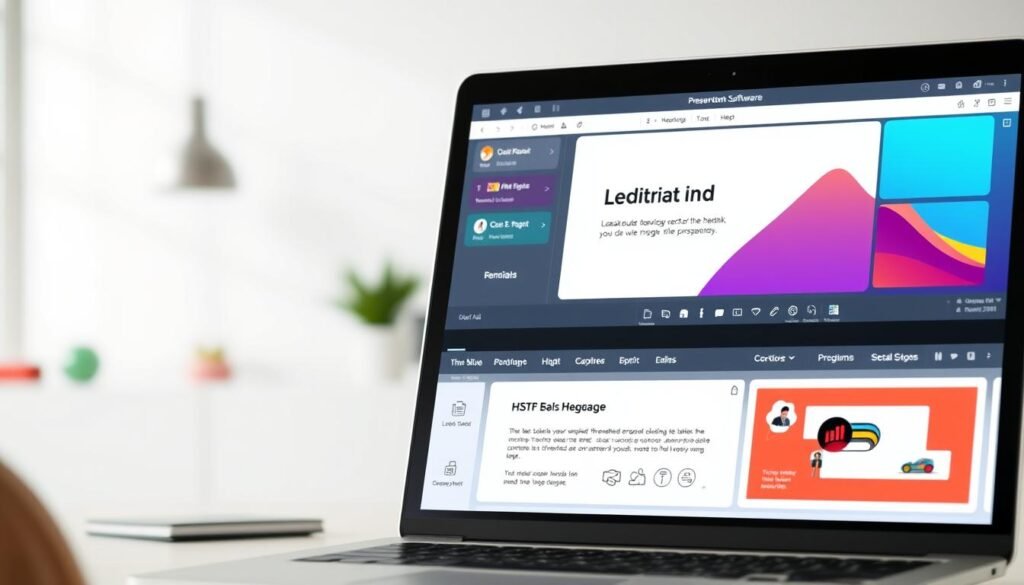
Prezi: Creative and Dynamic Presentations
Prezi revolutionizes traditional slide decks with its canvas approach. Instead of linear slides, you create zoomable presentations that flow like a story.
The platform offers animated paths that make content more engaging. This alternative to standard formats helps your project stand out during class demonstrations.
New users might need some practice to master the navigation. The learning curve is worth it for visually striking results.
Google Slides: Seamless Collaboration Tools
Google Slides excels when multiple people need to work together. Real-time editing allows your entire team to contribute simultaneously.
Built-in chat functionality lets you discuss changes without leaving the app. Presenter mode helps you rehearse before facing the class.
The platform integrates smoothly with other Google Workspace tools. This integration creates a streamlined workflow for various academic tasks.
Canva: Quick and Visually Appealing Designs
Canva provides thousands of professional templates for instant use. The drag-and-drop interface makes design accessible to everyone.
You get access to a massive library of images and graphics. This variety helps you create polished presentations quickly.
Remember that Canva operates primarily as a web-based platform. It doesn’t support direct PowerPoint file imports.
LibreOffice Impress: PowerPoint Alternative
LibreOffice Impress delivers robust desktop presentation capabilities. It handles most PowerPoint files and functions without compatibility issues.
The program supports advanced features like animation and video embedding. Hundreds of free templates help you start quickly.
This solution works completely offline, which benefits areas with unstable internet. However, it lacks built-in collaboration tools for group work.
Consider your specific needs when choosing between these options. Nigerian students might prefer offline tools like LibreOffice for reliability.
Cloud-based platforms offer greater flexibility for group assignments. Follow our social media for updates on new presentation tools and templates.
Top Free Spreadsheet Applications for Data Management
Organizing data effectively can make or break your academic assignments. We explore three powerful platforms that handle everything from simple lists to complex analysis.
Each option brings unique strengths to different educational scenarios. Your choice depends on whether you prioritize teamwork, advanced features, or offline reliability.

Google Sheets: Real-Time Collaboration Features
This cloud-based platform excels when multiple people need to work together. Real-time editing allows your entire team to contribute simultaneously.
Built-in chat functionality lets you discuss changes without leaving the application. Version history tracking prevents confusion about recent modifications.
Google Sheets offers helpful functions like GOOGLETRANSLATE for multilingual projects. The drag-and-drop interface makes rearranging data incredibly simple.
However, pivot tables are less refined than Excel’s version. This might matter for advanced statistical analysis.
Zoho Sheet: Advanced Functionality for Free
Zoho Sheet stands out with its impressive set of capabilities. The platform offers over 350 functions for complex data tasks.
AI-powered insights through “Ask Zia” provide quick data analysis. Automated chart suggestions help visualize information effectively.
User-level filters allow customized views for different team members. This keeps everyone focused on relevant information.
Occasional server glitches might interrupt your workflow. The extensive customization options sometimes require a learning period.
LibreOffice Calc: Powerful Desktop Solution
This native application delivers robust desktop spreadsheet capabilities. It handles most Excel files without compatibility issues.
The program supports advanced features like pivot tables and conditional formatting. Data filtering helps organize large sets efficiently.
Hundreds of free templates help you start projects quickly. Everything works completely offline, benefiting areas with unstable internet.
However, it lacks built-in collaboration tools for group work. This makes it better suited for individual assignments.
Consider your specific needs when choosing between these options. Nigerian students might prefer offline tools like LibreOffice Calc for reliability.
Cloud-based platforms offer greater flexibility for group assignments. Follow our social media for updates on new features and tutorials.
Best Free Coding Tools and Development Platforms
Learning programming opens doors to countless opportunities, and having the right tools makes this journey smoother. We explore platforms that support various development needs without financial investment.
These solutions help students build practical skills through hands-on experience. They accommodate different learning styles and project requirements.

Visual Studio Code: Comprehensive Code Editor
This editor offers extensive features for multiple programming languages. Its extension library provides additional capabilities for specialized tasks.
Debugging tools help identify and fix errors efficiently. The platform works offline, making it reliable for areas with limited internet access.
Customization options allow each user to create their ideal workspace. This flexibility supports different coding preferences and workflows.
GitHub: Version Control and Collaboration
This platform revolutionizes how teams manage code development. Version tracking ensures no changes get lost during group project work.
Issue tracking simplifies management of bugs and feature requests. The chat functionality enables seamless communication among team members.
Students can showcase their work through portfolio pages. This becomes valuable when seeking internships or employment opportunities.
Replit: Browser-Based Coding Environment
This web-based app eliminates installation requirements. Students can code from any device with internet access.
The platform offers a variety of templates for popular programming languages. This helps beginners start coding immediately without configuration.
Real-time collaboration features support shared coding sessions. Multiple users can work on the same project simultaneously.
For Nigerian students, browser-based options reduce hardware requirements. They provide accessible alternatives to desktop applications.
These platforms support different aspects of the programming learning course. Visual Studio Code excels in offline development, while GitHub focuses on team collaboration.
Replit offers the simplest way to begin coding without local setup. Each platform serves specific educational purposes effectively.
Follow our social media channels for updates on new features and programming resources. We share practical tips for maximizing these development tools.
Open Source Software Benefits for Educational Institutions
Educational organizations worldwide are discovering remarkable advantages through open source solutions. These platforms provide exceptional value while addressing specific academic requirements.
We’ve observed how institutions transform their digital capabilities without straining budgets. The community-driven nature of these tools creates sustainable ecosystems for learning.
Cost Savings for Schools and Universities
Traditional proprietary systems often come with substantial licensing fees. Open source alternatives eliminate these recurring expenses completely.
Schools can redirect saved funds toward teacher training and infrastructure improvements. This financial flexibility makes a significant difference in resource-constrained environments.
Rocket.Chat serves over 700 universities with secure collaboration features. Moodle supports approximately 3000 institutions globally for course management.
These examples demonstrate how open source solutions deliver enterprise-level capabilities at zero cost. The savings extend beyond initial implementation to long-term maintenance.
Enhanced Security Through Community Development
Community-driven development creates inherently more secure platforms. Thousands of developers worldwide continuously review and improve the code.
Transparency in development processes allows for quicker vulnerability identification. This collective oversight reduces security risks significantly.
Cyberattacks on educational institutions averaged nearly $500,000 in costs during 2020. Open source platforms provide stronger defense mechanisms against such threats.
Regular updates from global developer communities ensure protection against emerging risks. Institutions benefit from this shared security expertise without additional investment.
Customization Options for Specific Needs
Every educational institution has unique requirements and workflows. Open source tools offer unparalleled flexibility for customization.
Schools can adapt platforms like Moodle to match specific curriculum needs. Rocket.Chat can be configured for secure messaging that complies with institutional policies.
This adaptability extends to local language support and cultural context integration. Nigerian institutions can tailor solutions to their specific educational environment.
OpenSIS provides customizable student information systems for administrative tasks. BigBlueButton enables virtual classroom setups tailored to teaching methodologies.
These customization options ensure technology serves educational goals rather than dictating them. The platform becomes a tool that adapts to the institution’s vision.
Implementation success depends on selecting solutions with strong community support. Comprehensive documentation and active user forums facilitate smooth adoption.
We recommend starting with well-established platforms that offer extensive resources. This approach minimizes troubleshooting time and maximizes productivity.
Open source solutions foster innovation through global collaboration. Institutions both contribute to and benefit from shared knowledge and improvements.
For Nigerian schools, these advantages mean access to world-class tools that respect local constraints. The combination of affordability, security, and adaptability creates sustainable digital transformation.
“Open source software provides educational institutions with robust, customizable solutions that evolve with their needs while protecting limited budgets.”
Follow our social media channels for ongoing insights about integrating these solutions. We share practical implementation strategies and success stories from educational institutions worldwide.
Top Digital Platforms for Academic Assignments
The landscape of educational technology offers numerous options that cater to different project requirements and skill levels. We’ve tested various platforms to identify those delivering exceptional value without financial investment.
Our recommendations balance powerful features with practical accessibility. They help students accomplish their academic goals efficiently.
Category Overview and Key Recommendations
Visual Studio Code stands out for programming tasks with its extensive extension library. The platform supports multiple languages and offers robust debugging capabilities.
Google Sheets excels in collaborative data management. Real-time editing and built-in chat functionality make team projects smoother.
Canva provides impressive design templates for visual presentations. The drag-and-drop interface simplifies creating professional-looking content.
Each platform addresses specific academic needs effectively. Nigerian students benefit from options that work well with limited internet access.
Comparison of Features and Capabilities
Prezi’s dynamic canvas approach differs significantly from traditional slide decks. It offers zoomable presentations that create engaging storytelling experiences.
Google Slides focuses on seamless collaboration with simultaneous editing features. The integration with other Google Workspace tools enhances workflow efficiency.
Zoho Sheet delivers advanced data analysis capabilities with over 350 functions. The AI-powered insights provide quick information interpretation.
LibreOffice Calc serves as a reliable desktop alternative with full offline functionality. It handles most spreadsheet files without compatibility issues.
Visual Studio Code’s customization options allow personalized coding environments. GitHub revolutionizes version control for team programming projects.
Consider your specific assignment requirements when choosing between these options. Offline capabilities matter greatly for areas with unstable connectivity.
Combining tools like Google Sheets with presentation platforms creates integrated workflows. This approach enhances data visualization and project efficiency.
Follow our social media channels for updated comparisons and new platform recommendations. We share practical tips for maximizing these digital resources.
Implementation Strategies for Nigerian Classrooms
Successfully integrating digital resources requires thoughtful planning and adaptation to local conditions. We’ve developed practical approaches that address common challenges in Nigerian educational settings.
These strategies help institutions maximize available resources while ensuring sustainable implementation. They consider infrastructure limitations while maintaining educational quality.
Internet Accessibility Considerations
Connectivity remains a significant challenge across many Nigerian schools. We recommend prioritizing options with robust offline functionality.
Tools like LibreOffice Calc provide full spreadsheet capabilities without internet dependency. Visual Studio Code offers comprehensive coding features for offline development.
For areas with intermittent connectivity, consider hybrid approaches. Students can work offline and sync when internet access becomes available.
Schedule cloud-based activities during periods of reliable connectivity. This maximizes productivity while minimizing frustration.
Device Compatibility and Requirements
Hardware diversity across Nigerian schools demands flexible solutions. We suggest platforms that function across various devices and operating systems.
Browser-based tools like Replit eliminate installation requirements. They enable coding from smartphones, tablets, or computers with internet access.
Consider memory and processing requirements for desktop applications. Lightweight software ensures smoother performance on older devices.
Mobile optimization becomes crucial for smartphone-dependent users. Many options now offer responsive mobile interfaces for on-the-go access.
Teacher Training and Support Resources
Effective implementation requires adequate educator preparation. Numerous free training resources support professional development.
Online tutorials and documentation help teachers master new platforms. Community forums provide answers to specific technical questions.
We recommend starting with pilot programs in select classrooms. This allows for gradual adoption and troubleshooting before school-wide implementation.
Peer mentoring programs create sustainable support systems within institutions. Experienced teachers can guide colleagues through initial challenges.
Partnerships with technology communities offer hands-on workshop opportunities. These collaborations bring external expertise directly to educators.
- Begin with comprehensive needs assessment and infrastructure evaluation
- Select tools matching both educational objectives and technical capabilities
- Develop phased implementation plans with clear milestones and evaluation metrics
- Establish ongoing support mechanisms through help desks and peer networks
- Leverage government and NGO initiatives that provide digital education support
Follow our social media channels for updates on training opportunities and implementation success stories. We share practical strategies tailored specifically for Nigerian educational contexts.
Maximizing Productivity with Free Software Tools
Working smarter with digital resources helps students achieve more in less time. We explore how specific features and smart workflows can transform your academic experience.
These strategies help you focus on learning rather than repetitive tasks. They turn complex projects into manageable activities with professional results.
Time-Saving Features and Templates
Pre-designed templates give you a head start on assignments. Canva offers thousands of professional designs that require minimal customization.
Automation features handle routine tasks automatically. Zapier Tables uses AI actions to process data without manual input.
These capabilities reduce preparation time significantly. Students can dedicate more energy to content creation and research.
“Templates and automation transform hours of work into minutes, allowing students to focus on what truly matters—learning and creativity.”
Integration Between Different Applications
Connected platforms create seamless workflows between tasks. Google Sheets data can flow directly into Google Slides for dynamic presentations.
Rocket.Chat integrates with learning management systems for unified communication. This integration keeps all project discussions in one accessible location.
API connections enable custom workflows between specialized tools. These setups automate data transfer and synchronization processes.
Shared drives in Google Workspace ensure team members access current files. This eliminates version confusion and reduces email traffic.
Mobile Access for On-the-Go Work
Smartphone compatibility supports learning outside traditional classrooms. Google Sheets provides full functionality on mobile devices.
Replit enables coding practice from any location with internet access. This flexibility accommodates varying schedules and internet conditions.
Cloud synchronization ensures work saves across all devices automatically. Students can start on a computer and continue on a phone seamlessly.
Offline settings allow productivity even without internet connectivity. Changes sync once connection restores.
| Tool | Mobile Features | Offline Capability |
|---|---|---|
| Google Sheets | Full editing, collaboration | Limited offline access |
| Replit | Browser-based coding | Requires internet |
| Canva | Template browsing, editing | Download for offline use |
| Rocket.Chat | Messaging, file sharing | Message queuing offline |
For Nigerian students, mobile access proves particularly valuable. It supports learning in various environments and adapts to connectivity challenges.
These productivity strategies help students manage heavy workloads effectively. They turn digital tools into powerful allies for academic success.
Follow our social media for more time-saving tips and workflow ideas. We regularly share practical advice for maximizing these resources.
Conclusion: Enhancing Education Through Technology
Technology has transformed how we approach learning and collaboration in academic settings. Our exploration reveals how accessible digital resources can bridge resource gaps while maintaining quality education standards.
These tools offer practical solutions for various academic needs. From presentations to data management, they provide features like real-time editing and mobile access.
Nigerian institutions can leverage these options to create inclusive learning environments. The platform flexibility allows users to work across different devices and connectivity conditions.
We encourage exploring these resources to discover what works best for your needs. Each software brings unique strengths that can save time and enhance content quality.
Follow our social media channels for ongoing updates and community discussions. Together, we can continue making technology accessible and effective for every learner.
FAQ
Which free presentation tool is best for group projects?
Google Slides is our top recommendation for group work because it supports real-time collaboration, chat, and cloud-based sharing. It’s easy to use and works across devices, making it ideal for Nigerian students working together remotely.
Can I use free coding software offline?
Yes, Visual Studio Code and LibreOffice applications can be downloaded and used offline, which is helpful in areas with limited or unstable internet access. These tools offer robust functionality without requiring a constant connection.
Are there free alternatives to Microsoft Excel for data management?
Absolutely. Google Sheets and LibreOffice Calc are both powerful, free alternatives to Excel. Google Sheets excels in collaboration, while LibreOffice Calc offers advanced features for desktop use without needing an internet connection.
How can teachers in Nigeria integrate these tools into classrooms?
Teachers can start with user-friendly platforms like Google Workspace or Canva, which offer templates and tutorials. Providing basic training and choosing tools with low data usage can help overcome connectivity challenges common in some regions.
Is open-source software safe for school use?
Open-source software is generally secure because its code is publicly accessible and regularly reviewed by the developer community. Tools like LibreOffice and VS Code are trusted by educational institutions worldwide.
Which tool is best for creating visually engaging presentations quickly?
Canva is perfect for creating professional-looking presentations fast, thanks to its drag-and-drop interface and vast template library. It’s especially great for students who want high-impact visuals without design experience.